
ในกระบวนการผลิตผง โดยเฉพาะอย่างยิ่งในการเตรียมผงละเอียดพิเศษ การบดมากเกินไปและการจับตัวเป็นก้อนเป็นสองปัญหาที่พบได้ทั่วไป การบดมากเกินไปหมายถึงสถานการณ์ที่อนุภาคละเอียดที่มีคุณภาพยังคงถูกบดต่อไป ซึ่งนำไปสู่การสิ้นเปลืองพลังงานและผลกระทบในวงกว้าง ขนาดอนุภาค การกระจายตัว และในบางกรณี ประสิทธิภาพของผลิตภัณฑ์ลดลง การจับตัวเป็นก้อนเกิดขึ้นเมื่ออนุภาคขนาดเล็กมากดึงดูดซึ่งกันและกันด้วยแรงแวนเดอร์วาลส์ แรงไฟฟ้าสถิต หรือแรงเชื่อมของเหลว ส่งผลให้เกิดอนุภาคทุติยภูมิ ซึ่งส่งผลเสียต่อการกระจายตัวของผง การไหล และประสิทธิภาพการใช้งานขั้นสุดท้าย ปัญหาเหล่านี้ไม่เพียงแต่ลดประสิทธิภาพการผลิต แต่ยังเพิ่มการใช้พลังงานและต้นทุนการดำเนินงานอีกด้วย ในฐานะอุปกรณ์คัดแยกแบบแห้งที่มีประสิทธิภาพสูง, เครื่องแยกอากาศ สามารถแก้ไขปัญหาเหล่านี้ได้อย่างมีประสิทธิภาพโดยการแยกอนุภาคออกจากกันอย่างแม่นยำ.
สาเหตุของ “การบดละเอียดเกินไป” และ “การจับตัวเป็นก้อน” ในกระบวนการผลิตผง
ในระหว่างกระบวนการบดเชิงกล (เช่น การบดด้วยลูกบอล หรือ การกัดด้วยเจ็ทอนุภาคจะละเอียดขึ้นเรื่อยๆ เมื่อเวลาในการบดเพิ่มขึ้น อย่างไรก็ตาม เมื่อถึงระดับความละเอียดที่กำหนดแล้ว ปรากฏการณ์สมดุลการบดจะปรากฏขึ้น กล่าวคือ ในขณะที่อนุภาคละเอียดเพิ่มขึ้น อนุภาคละเอียดมากจะเริ่มจับตัวกันเป็นก้อน อัตราการลดขนาดอนุภาคจะค่อยๆ สมดุลกับอัตราการจับตัวกันเป็นก้อน หากการบดดำเนินต่อไปเกินกว่าจุดนี้ ขนาดอนุภาคอาจไม่ลดลงอีกต่อไป และอาจเพิ่มขึ้นด้วยซ้ำเนื่องจากการจับตัวกันเป็นก้อน.
ในขณะเดียวกัน หากไม่แยกผงละเอียดที่มีคุณภาพออกให้ทันเวลา ผงเหล่านั้นจะกลับเข้าสู่บริเวณการบดซ้ำๆ ทำให้เกิดการบดมากเกินไป.
ปรากฏการณ์เหล่านี้เด่นชัดเป็นพิเศษในกระบวนการผลิตผงละเอียดพิเศษ เช่น แคลเซียมคาร์บอเนต, รวมถึงควอตซ์และซิลิคอนคาร์ไบด์ ซึ่งส่งผลกระทบอย่างมากต่อคุณภาพและปริมาณการผลิตของผลิตภัณฑ์.
หลักการทำงานของเครื่องแยกอากาศ
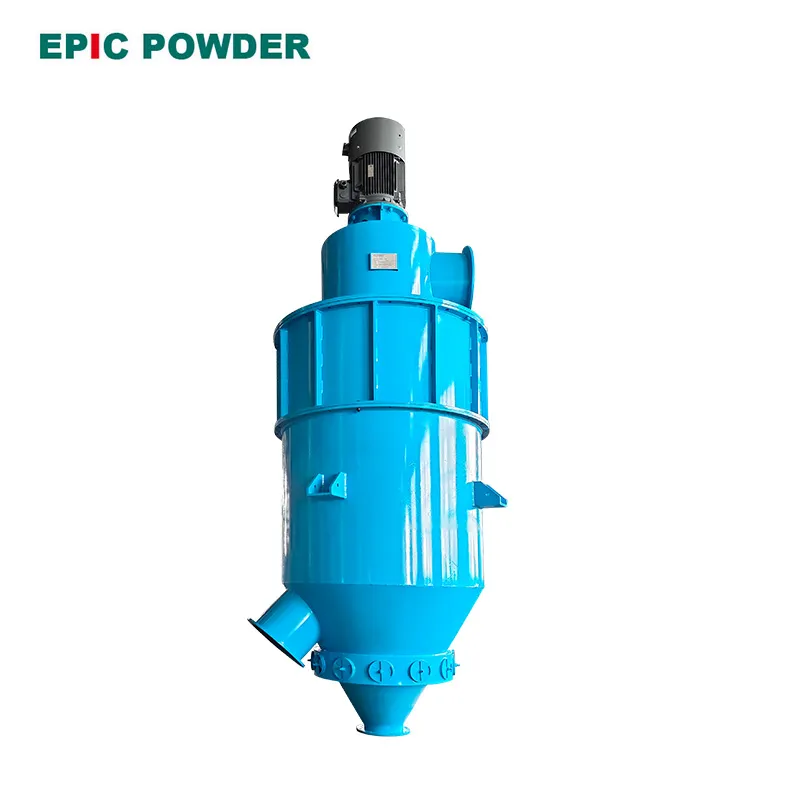
หนึ่ง ลักษณนามอากาศ เครื่องแยกอนุภาคทำงานโดยอาศัยผลรวมของกระแสลมและแรงเหวี่ยงหนีศูนย์กลาง ประเภทที่พบได้ทั่วไป ได้แก่ เครื่องแยกอนุภาคแบบเทอร์โบ (ไดนามิก) และระบบแบบไซโคลน เครื่องแยกอนุภาคแบบเทอร์โบโดยทั่วไปประกอบด้วยแผ่นกระจายอนุภาค แผ่นล้อแยกอนุภาค (กรงโรเตอร์) ใบพัดนำทาง และช่องอากาศเข้าสำรอง.
หลักการทำงาน:
วัสดุจะเข้าสู่โซนการคัดแยกพร้อมกับกระแสลม ภายใต้แรงเหวี่ยงหนีศูนย์กลางที่เกิดจากล้อคัดแยกที่หมุนด้วยความเร็วสูงและแรงต้านของกระแสลม อนุภาคละเอียดจะผ่านช่องว่างของล้อคัดแยกและถูกรวบรวมไว้ ในขณะที่อนุภาคหยาบจะถูกเหวี่ยงไปทางผนังของตัวเรือนและตกลงกลับไปยังโซนการบด กระแสลมรองจะช่วยชะล้างอนุภาคหยาบเพิ่มเติม กระจายอนุภาคละเอียดที่ปะปนอยู่ และลดการปนเปื้อน.
ด้วยการปรับพารามิเตอร์ต่างๆ เช่น ความเร็วรอบของโรเตอร์และอัตราการไหลของอากาศ สามารถควบคุมขนาดการตัดได้อย่างแม่นยำ (โดยทั่วไป D97 ≈ 3–150 μm) ทำให้ได้การกระจายขนาดอนุภาคที่แคบ.
ยังไง เครื่องจำแนกอากาศ แก้ไขปัญหา “การบดมากเกินไป” และ “การจับตัวเป็นก้อน”

การป้องกันการบดมากเกินไป
- เครื่องแยกขนาดอนุภาคด้วยลมจะต่ออนุกรมกับอุปกรณ์บด (เช่น เครื่องบดลูกบอลหรือเครื่องบดเจ็ท) เพื่อสร้างระบบวงจรปิด หลังจากบดแล้ว วัสดุจะเข้าสู่เครื่องแยกขนาดอนุภาค ผงละเอียดที่มีคุณภาพจะถูกแยกและเก็บรวบรวมทันที ในขณะที่อนุภาคหยาบจะกลับไปยังโซนบดเพื่อลดขนาดต่อไป วิธีนี้จะช่วยป้องกันไม่ให้ผงละเอียดถูกบดซ้ำหลายครั้ง หลีกเลี่ยงการบดมากเกินไป ปรับปรุงประสิทธิภาพการบด และลดการใช้พลังงาน.
- เมื่อเปรียบเทียบกับระบบวงจรเปิด ระบบวงจรปิดช่วยลดการบดที่มากเกินไปได้อย่างมาก และทำให้ได้การกระจายขนาดอนุภาคที่แคบลง.
การลดการจับกลุ่ม
- การกระจายตัวของกระแสลมและการล้างด้วยอากาศรองในระหว่างการคัดแยกช่วยสลายกลุ่มอนุภาคที่อ่อนแอและปรับปรุงการกระจายตัวของผงให้ดีขึ้น.
- การแยกอนุภาคละเอียดออกอย่างทันท่วงทีจะช่วยป้องกันไม่ให้อนุภาคตกค้างอยู่ในบริเวณการบดนานเกินไป ซึ่งจะช่วยลดโอกาสการเกิดการจับตัวเป็นก้อน.
- เครื่องแยกอนุภาคด้วยอากาศสมัยใหม่มีดีไซน์ที่ได้รับการปรับปรุงให้เหมาะสมที่สุด (เช่น ตัวกระจายอนุภาคและกรวยสร้างความปั่นป่วนที่ดีขึ้น) เพื่อเพิ่มประสิทธิภาพการกระจายตัวและลด "ปรากฏการณ์ตะขอเกี่ยวปลา" (การจำแนกอนุภาคละเอียดผิดพลาดว่าเป็นอนุภาคหยาบ).
นอกจากนี้ การทำงานด้วยแรงดันลบและการออกแบบระบบปลอดฝุ่นยังช่วยให้การผลิตสะอาดและเป็นมิตรต่อสิ่งแวดล้อม.
ข้อดีและข้อควรพิจารณาที่สำคัญในการนำไปใช้
เครื่องแยกอากาศถูกนำมาใช้กันอย่างแพร่หลายใน แร่ธาตุที่ไม่ใช่โลหะ, สารเคมี ยา และวัสดุสำหรับแบตเตอรี่ ข้อดีหลักๆ ได้แก่:
- ความแม่นยำในการจำแนกประเภทสูง พร้อมประสิทธิภาพ 60%–90%
- ความสามารถในการจำแนกประเภทหลายขั้นตอนเพื่อผลิตอนุภาคที่มีขนาดแตกต่างกันหลายขนาด
- ประหยัดพลังงาน ทำงานเงียบ และควบคุมง่าย
ในทางปฏิบัติ พารามิเตอร์การทำงาน (เช่น ความเร็วรอบของใบพัดและการไหลของอากาศ) ควรได้รับการปรับให้เหมาะสมตามคุณสมบัติของวัสดุ (เช่น ปริมาณความชื้นและความสามารถในการไหล) หากจำเป็น สามารถใช้สารเติมแต่งเพื่อป้องกันการจับตัวเป็นก้อนเพิ่มเติมได้.
การสร้างระบบบดแบบวงปิดที่มีตัวแยกขนาดอนุภาคด้วยลม เป็นหนึ่งในวิธีที่มีประสิทธิภาพที่สุดในการแก้ปัญหาการบดละเอียดเกินไปและการจับตัวเป็นก้อนในกระบวนการผลิตผง ช่วยปรับปรุงคุณภาพและผลผลิตของผลิตภัณฑ์ ในขณะเดียวกันก็ช่วยให้การผลิตเป็นมิตรต่อสิ่งแวดล้อมและมีประสิทธิภาพ ผลักดันอุตสาหกรรมผงไปสู่ความแม่นยำและความละเอียดที่สูงขึ้น.
บทสรุป
ในสาขาการแปรรูปผง, เครื่องจักรผงชิงเต่าเอปิก (EPIC Powder) เป็นผู้จัดจำหน่ายอุปกรณ์แปรรูปผงละเอียดพิเศษระดับมืออาชีพ เครื่องแยกอนุภาคด้วยลมขั้นสูงของบริษัท ได้แก่ เครื่องแยกอนุภาคแบบเทอร์โบซีรีส์ HTS เครื่องแยกอนุภาคแนวตั้งซีรีส์ ITC และอื่นๆ เครื่องแยกประเภทอากาศซีรีส์ CTC. ระบบเหล่านี้มีชื่อเสียงในด้านความแม่นยำในการจำแนกประเภทสูง การกระจายขนาดอนุภาคที่แคบ และประสิทธิภาพการกระจายตัวที่ยอดเยี่ยม.
ด้วยการผสานรวมเครื่องแยกขนาดอนุภาคด้วยลมเข้ากับกระบวนการบดแบบวงปิด EPIC Powder สามารถขจัดปัญหาการบดละเอียดเกินไปและการจับตัวเป็นก้อนได้อย่างมีประสิทธิภาพ ในขณะเดียวกัน ระบบนี้ยังช่วยลดการใช้พลังงาน ปรับปรุงคุณภาพผลิตภัณฑ์ และเป็นมิตรต่อสิ่งแวดล้อมอีกด้วย.
การเลือกใช้อุปกรณ์คัดแยกขนาดของ EPIC Powder ช่วยให้ผู้ผลิตก้าวไปสู่ยุคแห่งการแปรรูปผงแป้งที่มีประสิทธิภาพและแม่นยำยิ่งขึ้น.

ขอบคุณที่อ่านนะคะ หวังว่าบทความของฉันจะเป็นประโยชน์นะคะ แสดงความคิดเห็นไว้ด้านล่างได้เลยค่ะ หรือหากมีข้อสงสัยเพิ่มเติม สามารถติดต่อตัวแทนฝ่ายบริการลูกค้าออนไลน์ของ Zelda ได้ค่ะ
— โพสต์โดย เอมิลี่ เฉิน