
The rapid development of next-generation technologies such as 5G communications, new energy vehicles, and artificial intelligence has placed unprecedented demands on the performance of thermal management materials. These materials are required to be highly thermally conductive yet electrically insulating, lightweight yet high-temperature resistant, and to combine outstanding performance with controllable costs. Among many candidate materials, high-purity ultrafine alumina stands out due to its excellent overall properties.
As is well known, the performance of ceramic products largely depends on the ceramic powders used. Different preparation methods produce ceramic powders with variations in physical and хімічны properties. Therefore, powders prepared by different methods are suitable for different application scenarios.
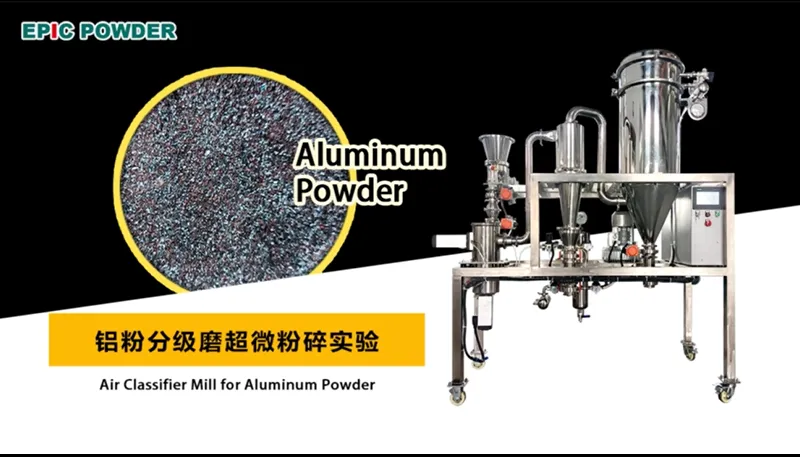
What is High-Purity Ultrafine Alumina?
High-purity ultrafine alumina generally refers to парашкі аксіду алюмінію with a purity of 4N (99.99%) or higher, and a particle diameter of D50 ≤ 1.0 μm. Alumina itself exists in multiple crystal forms, such as γ, δ, θ, and α, among which α-Al₂O₃ is the only thermodynamically stable phase.
When high-purity alumina particle sizes are reduced to the micron or even nanometer scale, surface effects and small-size effects give the material properties superior to conventional materials. These include higher sintering activity, better dispersibility, and superior optical, thermal, magnetic, and electrical characteristics.
The combination of high strength, high hardness, high-temperature resistance, corrosion resistance, and electrical insulation, together with the unique advantages of ultrafine size, makes high-purity ultrafine alumina widely used in advanced fields. These include integrated circuit substrates, electrical insulation materials, electronic packaging, and aerospace applications.
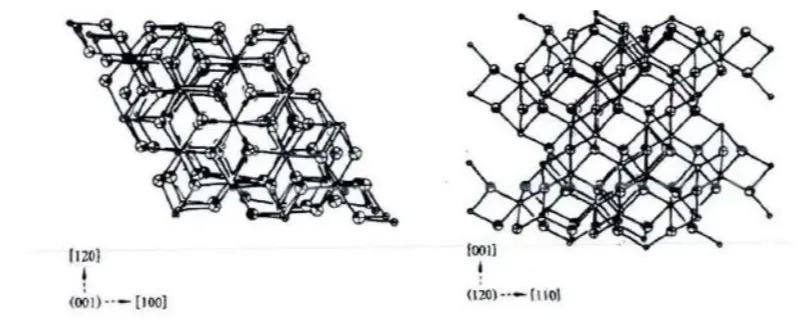
Main Preparation Methods of High-Purity Ultrafine Alumina
The preparation technology of high-purity ultrafine alumina is the key factor limiting its performance and application. Currently, the main preparation methods can be divided into three categories: gas-phase methods, liquid-phase methods, and solid-phase methods, with liquid-phase methods being the most widely applied in industry.
Газафазныя метады
Gas-phase methods involve converting raw materials into gaseous substances through electric arc heating, laser evaporation, electron beam heating, or directly using gases. Within the reaction equipment, a series of physical and chemical changes occur. During heating and cooling, crystal nucleation and particle growth take place, producing ultrafine alumina powders.
Gas-phase methods can effectively solve the agglomeration problem by controlling the type and concentration of reaction gases. Typical gas-phase methods include spray pyrolysis and chemical vapor deposition (CVD).
(1) Spray Pyrolysis
Spray pyrolysis, also known as flame spray pyrolysis, is based on generating micron-sized aerosol droplets via ultrasound. These droplets are then heated at 400°C–800°C to decompose and form high-purity ultrafine alumina powders
Because evaporation, precipitation, drying, and decomposition are conducted in multiple separate stages, controlling process parameters at each step (such as residence time and decomposition temperature) allows precise adjustment of памер часціц, morphology, and chemical composition.
For example, using 99.997% pure aluminum nitrate nonahydrate as the raw material, an aluminum nitrate solution was prepared. By employing spray pyrolysis at 700°C, spherical alumina particles smaller than 400 nm with no agglomeration were obtained.
(2) Chemical Vapor Deposition (CVD)
CVD involves reacting aluminum chloride with water vapor in a reaction chamber to produce alumina nanoparticles. Common CVD methods include flame CVD and laser pyrolysis CVD. The advantage is that controlling the type and concentration of reaction gases can effectively reduce agglomeration. The resulting powders are small in size, have high specific surface area, and high purity. Final product purity can exceed 99.6%, with heavy metals often below detection limits.
The disadvantages include low yield and difficulty in collecting powders. For example, using plasma metal-organic CVD, 5.6 nm high-purity alumina nanoparticles were prepared under 1000°C and 5.3 kPa in an oxygen atmosphere, resulting in spherical nanosized powders.
Liquid-Phase Method
Liquid-phase methods, also called wet-chemical methods, are widely used in laboratories and industrial production for preparing α-Al₂O₃. These methods involve preparing powders from homogeneous solutions of reactants through physical and chemical transformations.
They allow synthesis at the molecular level, precise control of chemical composition, tunable particle shape and size, good dispersibility, and the ability to add trace active components. Common methods include precipitation, Bayer and modified Bayer processes, sol-gel method, aluminum alcoholate method, microemulsion method, etc.
(1) Precipitation Method
The precipitation method mixes different substances in solution, adding a precipitant to form an insoluble compound. This precursor precipitate is washed, dried, and calcined to produce powder particles. Variants include direct precipitation, homogeneous precipitation, and hydrolysis precipitation.
For example, using aluminum nitrate and ammonium bicarbonate as raw materials, co-precipitation produced 20–30 nm nanometer Al₂O₃ powders. Adding PEG6000 improved powder dispersibility.
(2) Bayer and Modified Bayer Methods
The Bayer process is the most common liquid-phase method. It utilizes changes in aluminum hydroxide solubility in alkaline solutions. Aluminum hydroxide is converted into sodium aluminate with concentrated NaOH. Insoluble impurities are separated, then diluted and seeded to re-precipitate aluminum hydroxide. After calcination and dehydration, alumina powder is obtained.
Traditional Bayer produces alumina with <98.5% purity. The process is simple and widely used (95% of aluminum companies). Its drawbacks include difficulty in controlling raw material dissolution, SiO₂ impurities forming silicate during precipitation, lowering yield, increasing cost, and difficulty removing impurities.
The modified Bayer process purifies sodium aluminate by removing Si, Fe, and other impurities and controls decomposition conditions. This produces high-purity aluminum hydroxide, which, after high-temperature calcination and grinding, yields high-purity alumina.
(3) Sol-Gel Method
The sol-gel method reacts aluminum salts at low temperature to produce a precursor sol. Concentration forms a gel, which is then heat-treated to obtain ultrafine alumina powders. Advantages include low synthesis temperature, controllable process, high purity, small particle size, and narrow size distribution. Disadvantages include high raw material cost, long production cycle, precise reaction control, and possible toxic gas generation
For instance, using inexpensive metallic aluminum powder as an aluminum source and 3 wt.% PEG600 dispersant, non-hydrolytic sol-gel synthesis produced ultrafine α-Al₂O₃ powders with an average particle size <100 nm.
(4) Aluminum Alcoholate Method
The alcoholate method is an iteration of alcohol salt hydrolysis. Aluminum reacts in isopropanol to form aluminum isopropoxide, which is hydrolyzed to hydrate alumina. After maturation, filtration, drying, dehydration, and activation, alumina powders with high sintering activity are obtained.
Advantages include mild conditions, stable product properties, and high purity. Challenges include the need for vacuum distillation to purify aluminum alcoholate, precise temperature and vacuum control, high energy consumption, and safety risks due to solidification during cooling.
(5) Anion Coordination–Spray Freeze-Drying Synergistic Method
To address hard agglomeration, poor crystallization, and low sintering activity in traditional processes, researchers proposed combining anion coordination and spray freeze-drying. Optimizing hydrolysis and sol-gel processes, introducing sulfate and citrate ions establishes dual stabilization (electrostatic + steric), and spray freeze-drying converts sol to powder without damage. Controlled heat treatment produces ultrafine powders with excellent dispersibility, flowability, narrow size distribution, low bulk density, and high specific surface area.
(6) New Liquid-Phase Methods
New spray precipitation methods produce nanometer α-Al₂O₃ powders with high sintering activity, weak agglomeration, and good dispersibility. For example, precursor powders calcined at 1150°C for 2 h transformed from amorphous to α-Al₂O₃. Advantages include better contact and reaction area during precipitation, improving dispersibility.
(7) Ammonium Aluminum Sulfate Crystallization–Calcination Method
A traditional method involves forming ammonium aluminum sulfate from aluminum sulfate, then calcining to produce alumina. Raw material purity determines final powder purity. Advantages include readily available, low-cost raw materials and recyclable mother liquor. Disadvantages include incomplete calcination leading to residual sulfate, ammonia and SO₃ emission, and environmental pollution.
03 Solid-Phase Methods
Solid-phase methods are common for α-Al₂O₃ powder production. They are simple, high-yield, low-cost, and easy to industrialize. However, they consume high energy, have low efficiency, and produce powders with uneven particle size and limited functional properties. Therefore, achieving fine, high-purity α-Al₂O₃ is challenging via solid-phase methods.
Role of Ultrafine Powder Processing and Equipment
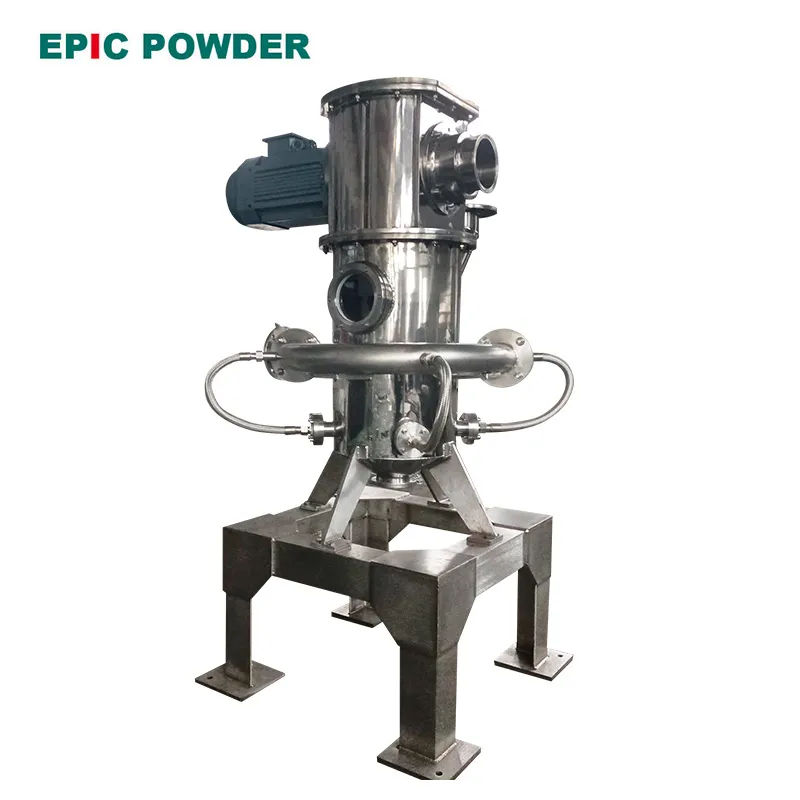
Ultrafine powder processing is an indispensable post-treatment in high-purity ultrafine alumina preparation. It is especially suitable for precursor powders from gas-phase, liquid-phase, or solid-phase methods
after calcination.
This process uses high-energy mechanical forces, airflow impact, or media grinding to break hard agglomerates, reduce particle size to D50 ≤ 1.0 μm or even submicron/nano levels, and improve specific surface area, dispersibility, and sintering activity.
It also optimizes particle size distribution and flowability, providing high-quality raw materials for subsequent ceramic forming and densification. The microstructure uniformity and overall performance of the final product depend directly on this process.
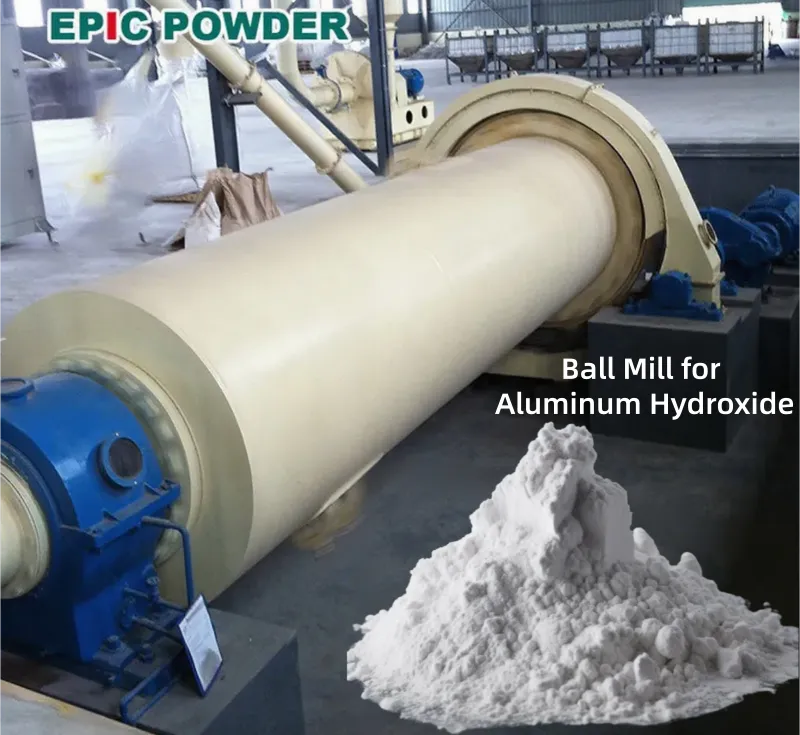
Common equipment includes струменевыя млыны, stirred шаравыя млыны, and vibration mills. Jet mills are preferred in industrial production. They use high-pressure inert gas to generate supersonic streams, causing particle collisions and self-grinding without contamination. This is ideal for 4N+ purity alumina, achieving precise particle size distribution and spherical or near-spherical particles with high yield and relatively low energy consumption.
Stirred ball mills are mainly used in wet or laboratory-scale high-energy grinding. High-density media provide nano-level refinement. Vibration mills are auxiliary equipment for small-scale precision processing. By optimizing parameters such as airflow, media ratio, and residence time, particle size limitations of previous preparation methods can be overcome, promoting stable industrial production of high-purity ultrafine alumina.
Заключэнне
High-purity ultrafine alumina is a key base material in thermal management applications. Advances in its preparation technology directly affect emerging industries such as 5G, new energy vehicles, and AI. Gas-phase, liquid-phase, and solid-phase methods, combined with ultrafine powder processing, provide diverse routes to high-performance powders.
Looking ahead, with ongoing progress in materials science and green manufacturing, preparation technologies will become more efficient, environmentally friendly, and intelligent. Powder performance will improve, costs will decrease, and high-tech industries will gain a strong boost. With joint efforts from researchers and companies, this advanced material will shine in more high-end applications.

«Дзякуй за чытанне. Спадзяюся, мой артыкул будзе карысным. Калі ласка, пакіньце каментар ніжэй. Вы таксама можаце звязацца з прадстаўніком службы падтрымкі кліентаў Zelda онлайн, калі ў вас ёсць дадатковыя пытанні».
— Апублікавана Эмілі Чэн